Full Description
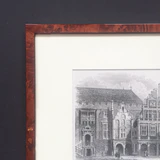
This elegant Port de Dieppe engraving dates from the 18th century and is based on a painting by Joseph Vernet. Charles-Nicolas Cochin and Jacques-Philippe Le Bas engraved this detailed print.
The image captures the busy port’s daily life, trade, and ships with clear detail. This engraving was part of Vernet’s royal series, Les Ports de France, which highlighted France’s most important ports. The condition is very good, making it a fine example of French Enlightenment art.
Collectors and art lovers will value this detailed portrayal of one of Normandy’s historic ports. It blends cultural importance and visual beauty perfectly. The Port de Dieppe engraving is, without a doubt, a very special piece.
About the Artist: Charles-Nicolas Cochin, Jacques-Philippe Le Bas, Joseph Vernet
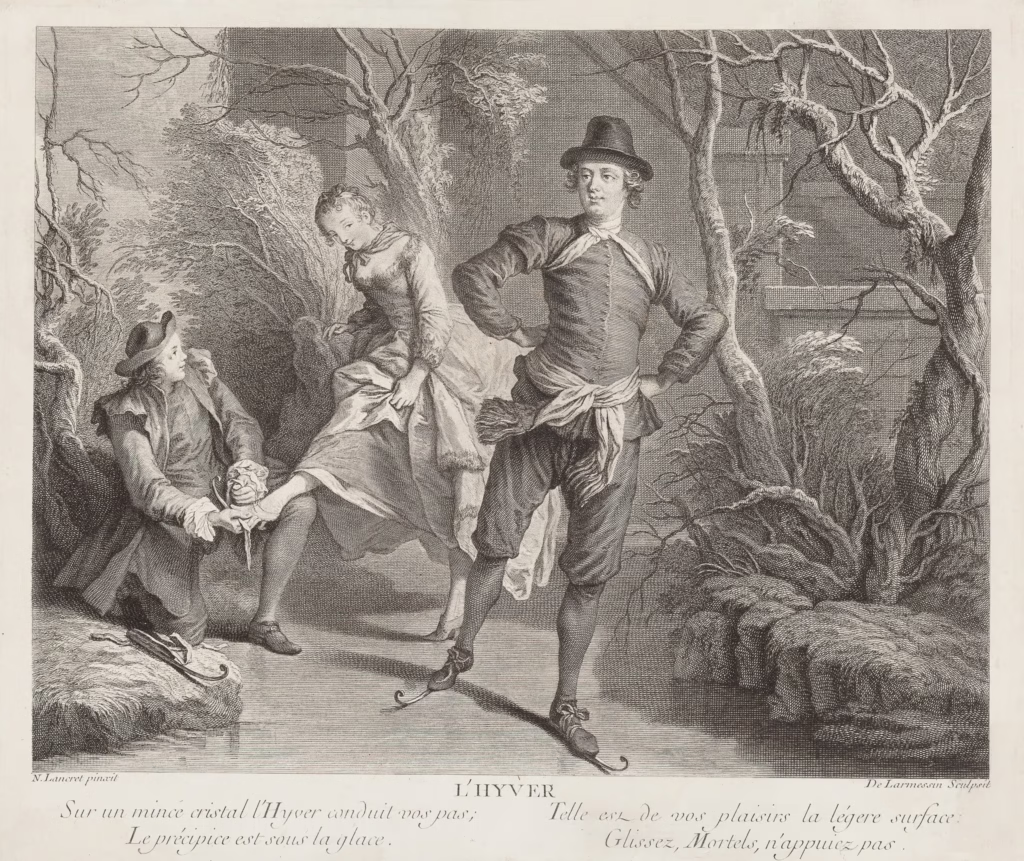
Charles-Nicolas Cochin (1715–1790) was a prominent French engraver, designer, writer, and art critic known for his significant influence in 18th-century French art. Trained by his father, also an engraver, he gained early royal patronage under King Louis XV, producing engravings to commemorate court events. Cochin was attached to the Menus-Plaisirs du Roi and served as the King’s administrator of the arts, commissioning works and shaping artistic tastes in France. He was a vocal critic of the Rococo style and an advocate for Neoclassicism, emphasizing technical precision and natural elements. His works include over 200 book illustrations, portraits, historical prints, and designs for paintings and sculptures. Notable among his engravings are pieces like “The Death of Hippolytus” and the frontispiece to Diderot’s Encyclopédie. Cochin’s legacy lies in his artistic skill, administrative influence, and role as a key tastemaker of his time.
About the Era: 18th Century (1700s)
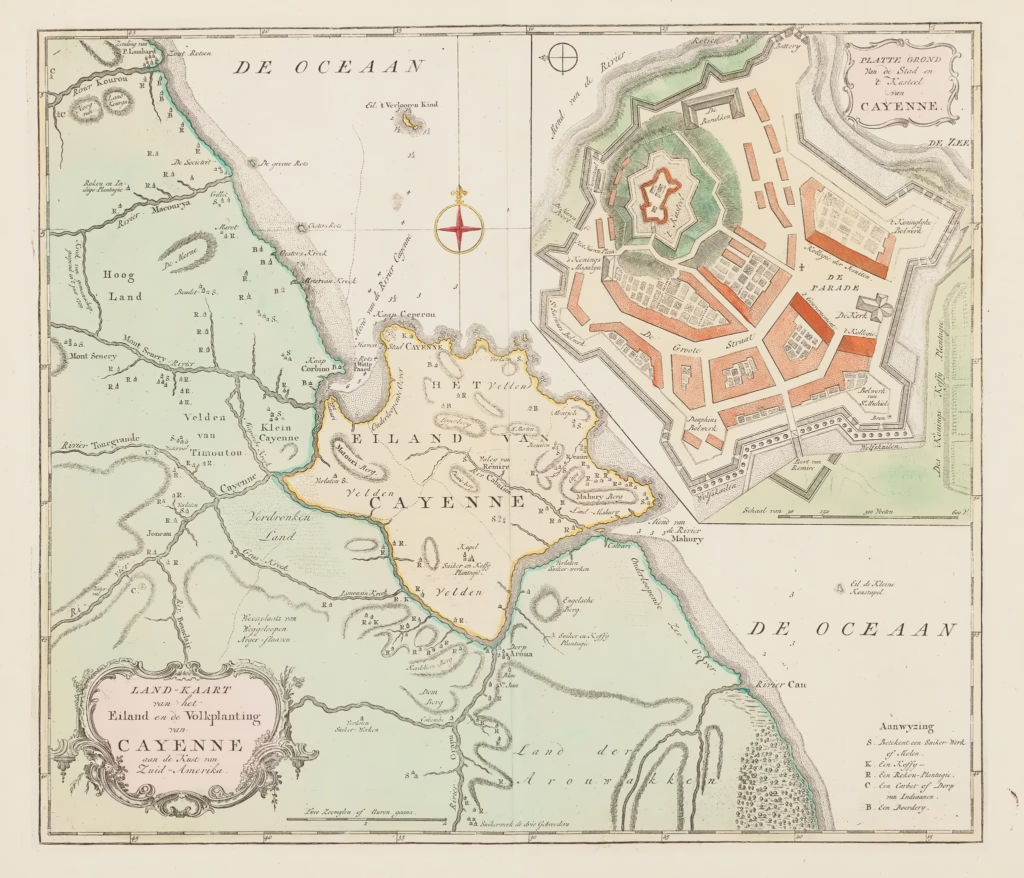
During the 18th century, mapmaking became more scientific and precise. Improved instruments like the telescope and chronometer helped cartographers increase accuracy, shifting maps from decorative art to factual documents. Copperplate engraving stayed as the main printing method, producing fine lines, while hand-coloring added visual impact. French cartographers, such as the Cassini family, led national surveys with geodetic measurements and triangulation, while Dutch mapmakers like Joan Blaeu enhanced printing and atlas quality, ushering in a golden age of atlases.
Maps began including more information and notes to help users, and ornate decorations mostly gave way to scientific clarity, except for cartouches and borders. National and colonial ambitions guided map production to aid navigation and territorial claims. By the late 18th century, large-scale surveys set modern cartography standards. Today, 18th-century maps mix scientific knowledge with artistry, are prized by collectors, and have influenced later cartographic methods. They offer insights into Enlightenment exploration and geography.