Full Description
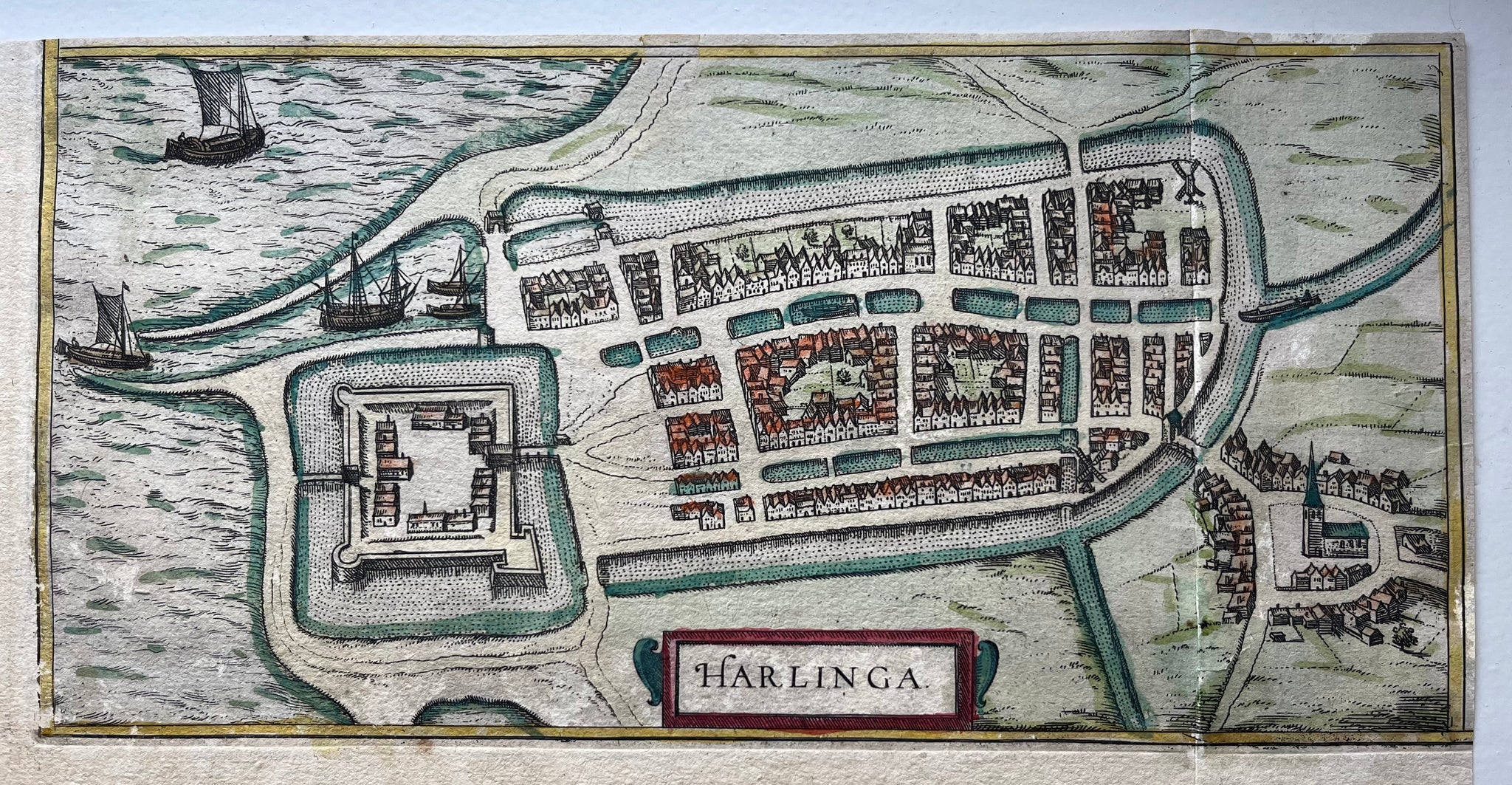
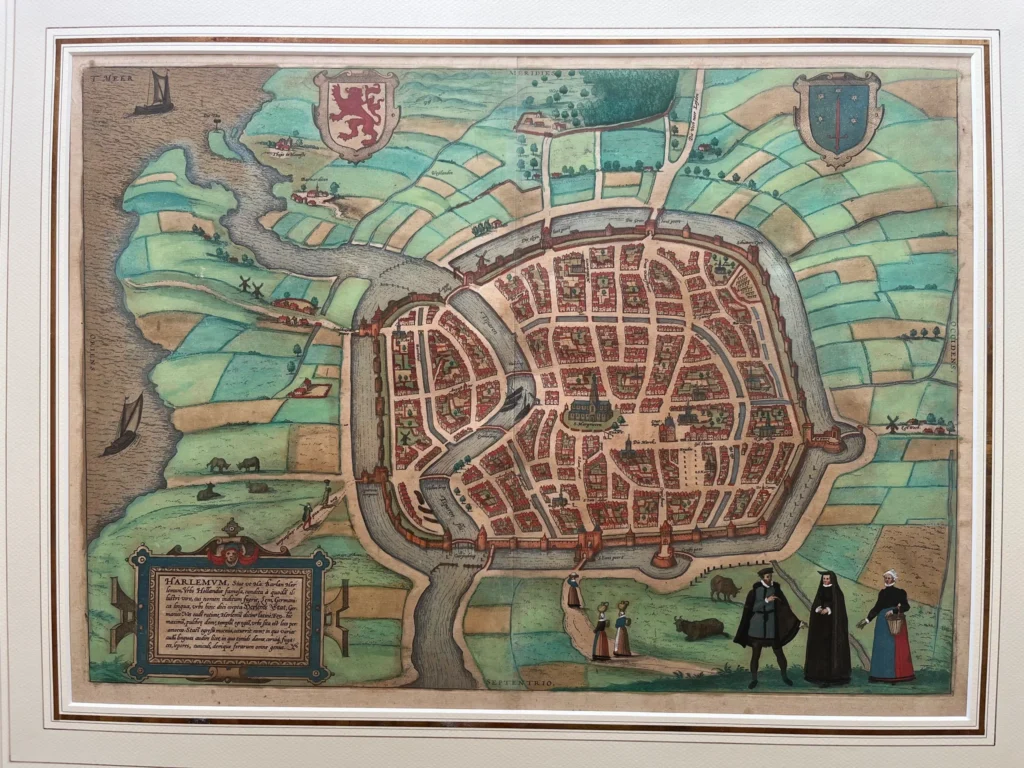
This Antique Harlingen Map titled ‘HARLINGA’ shows the Frisian port city in beautiful 16th‑century detail. Braun and Hogenberg published this contemporary handcoloured engraving around 1580 as part of their famous city atlas. The map presents the harbour, fortified walls, and canals that shaped the city’s early importance in Dutch maritime trade.
This antique Harlingen map measures 13 x 27 cm and remains in very good condition. A visible fold runs through the centre, with wide margins at the top and right, exactly as issued. Bright hand colouring brings life to the streets, ships, and waterways. The Harlingen Map by Braun and Hogenberg illustrates both artistic skill and cartographic accuracy.
Collectors of old maps and Dutch town views admire this Harlingen Map by Braun and Hogenberg for its vivid detail and rarity. It captures the spirit of Friesland’s coastal city at the height of the 16th‑century trading era.
About the Artist: Joan Blaeu
Joan Blaeu (1596–1673) was a leading Dutch cartographer and publisher, born in Alkmaar and the son of Willem Blaeu, a famed mapmaker. He succeeded his father as the official cartographer of the Dutch East India Company in 1638. Blaeu was renowned for his elaborate atlases and maps, including the monumental “Atlas Maior,” published in 1662, which featured 11 volumes with nearly 600 beautifully engraved maps. His maps were known for their scientific accuracy, artistry, and detailed decorative elements such as cartouches and vignettes.
Blaeu’s work incorporated recent geographical discoveries and cosmological knowledge, such as the heliocentric model. He was a prominent figure in Amsterdam’s cartographic and civic communities, serving on the city council. Blaeu’s atlases became status symbols for their size, beauty, and cartographic innovation, leaving a lasting legacy in the history of cartography.
About the Era: 16th Century (1500s)
The 16th century saw a strong growth in mapmaking and printmaking. Copperplate engraving revolutionized cartography, helping mapmakers create more detailed and accurate maps. At the same time, exploration, trade, and religious changes increased Europe’s need for reliable maps. Engravers cut designs into copper plates, inked them, and pressed paper to produce clear images. Afterward, artisans hand-colored many maps to enhance their appeal. This method replaced earlier woodcut printing, allowing finer lines and richer details. Influential figures like Marcantonio Raimondi and Gerardus Mercator contributed to this progress, sometimes collaborating or engraving their own maps.
Core innovators Abraham Ortelius, Gerard Mercator, and Jodocus Hondius blended science and art in their atlases. Their maps represented not only geography but also political power and cultural pride, supporting education and navigation. Today, maps from this period remain highly valued for their beauty and historical importance, inspiring future cartographical work and prized by collectors and museums worldwide.