Full Description
This Antique Lyon map is titled “Carte du Lionnois, Forest, Beaujolois et Masconois.” It shows the regions of Lyon, Forez, Beaujolais, and Mâcon in eastern France. The map is oriented with south at the top, which gives it a distinctive and unusual layout.
Jean le Clerc published this contemporary hand-coloured engraving in 1619. The map displays towns, rivers, and regional borders with clear engraving and decorative colouring. As a result, it offers both geographic detail and historical interest. The orientation and early date make it especially appealing to collectors of French regional maps.
This map measures 30.5 × 43 cm and is in good condition. Overall, browning is visible, and the paper is slightly weak at the centrefold. These features are consistent with age. Collectors value this antique Lyon map for its rarity, early publication date, and regional focus.
VAT: Margin goods, no VAT charged.
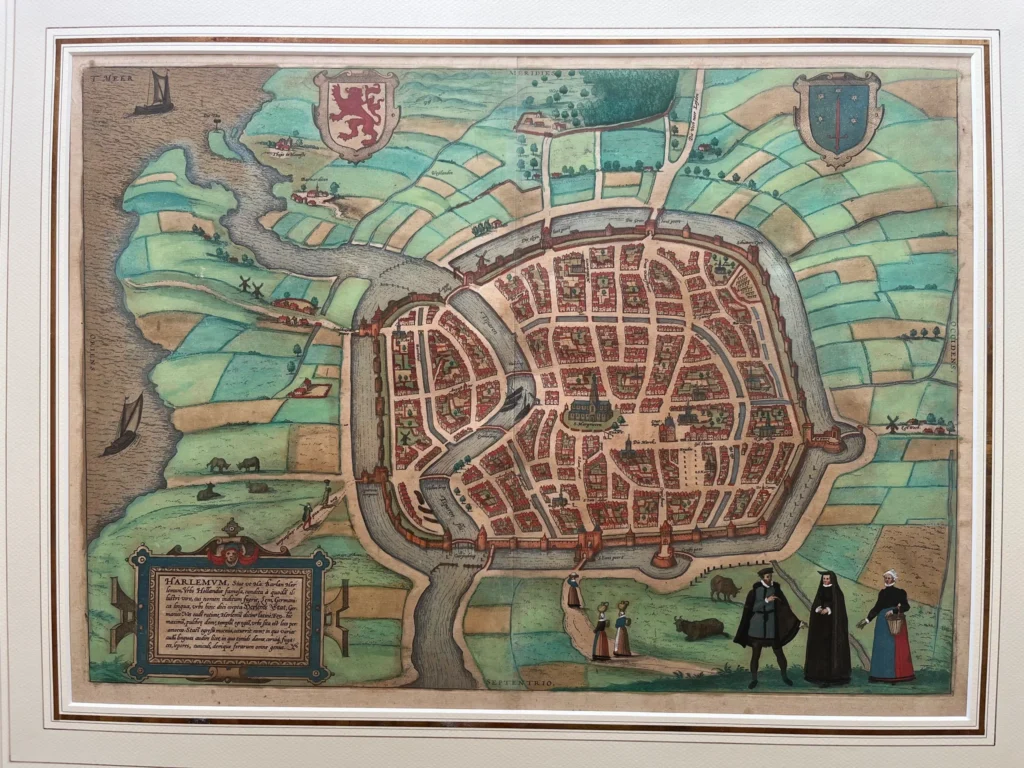
Explore our entire collection of antique maps, city views and various prints at our store located in the historic heart of Haarlem.
About the Artist: Jean le Clerc
Unfortunately, there is no information available about this artist yet. We will update this section when possible.
About the Era: 17th Century (1600s)
The 17th century greatly advanced mapmaking and printmaking, with copperplate engraving enabling cartographers to create detailed and accurate maps. During the Dutch Golden Age, increased trade and exploration boosted the demand for maps, turning map printing into a major industry. Skilled engravers carved designs into copper plates, applied ink, and pressed paper to produce fine prints. After printing, artisans hand-colored maps to enhance their beauty and clarity. Copperplate printing replaced woodcuts, offering smoother lines and finer details. Renowned mapmakers like Blaeu, Janssonius, and Hondius combined scientific knowledge with artistic skill. This era produced remarkable atlases, such as Joan Blaeu’s Atlas Maior. Maps not only charted geography but reflected political power, trade routes, and scientific discoveries. Printed maps became essential for navigation, colonization, and education. Dutch publishers led Europe’s map market, shaping global cartographic standards. These original maps remain prized for their detail and artistry, influencing future mapmaking and holding high value for collectors and museums today.