Full Description
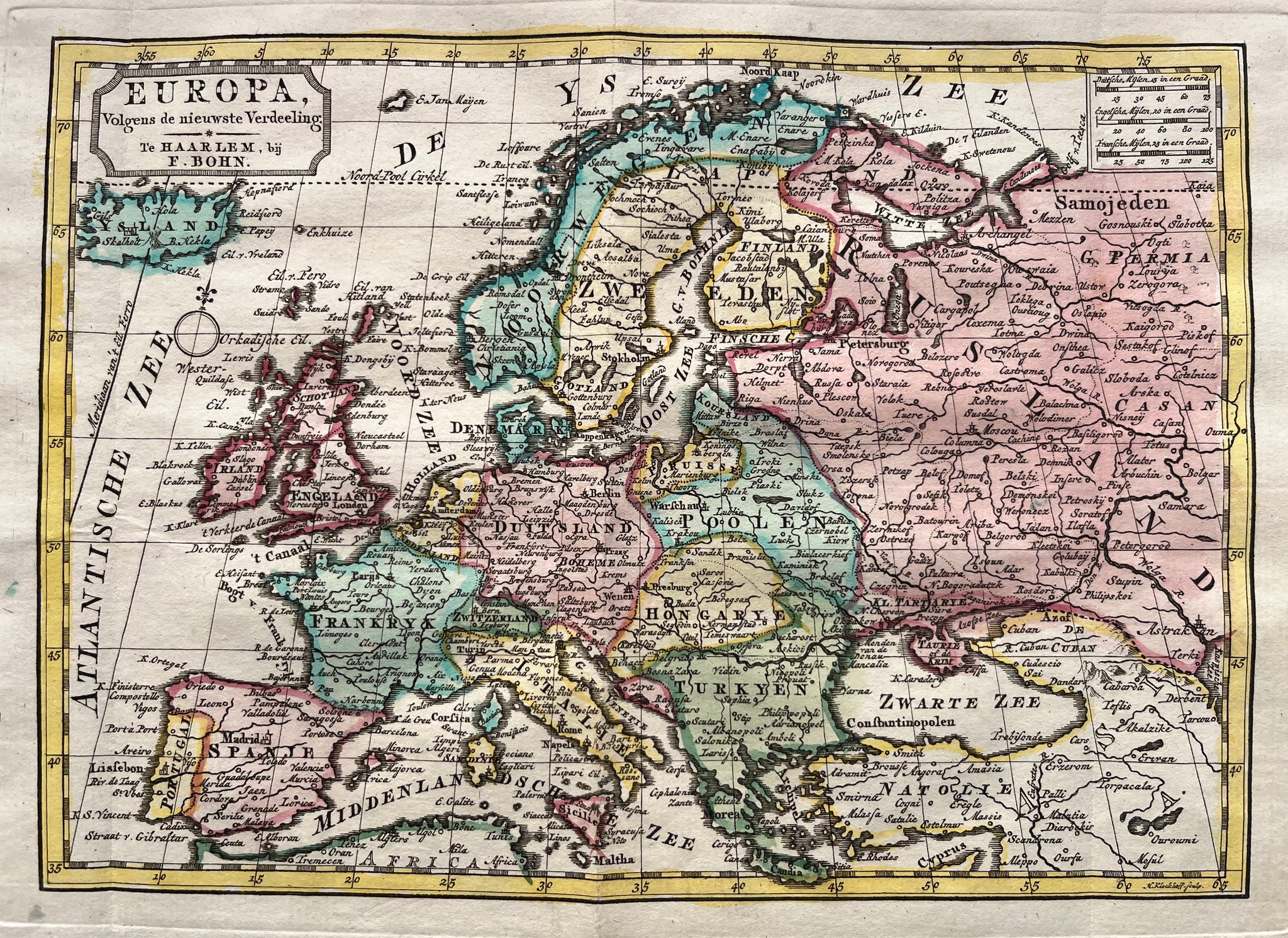
This Europa Antique Map Bohn titled ‘Europa, volgens de nieuwste Verdeeling’ is a rare late 18th‑century engraving showing the continent in fine detail. Klockhoff engraved the map, and F. Bohn published it in Haarlem in 1794. The handcoloured print reflects the political and geographic divisions of Europe in that era.
The map measures 16.5 x 23.5 cm and remains in very good condition, with the original folds visible as published. Borders and countries are delicately coloured, while clear lines and neat lettering show the craftsmanship of early Dutch engraving.
This Europa Antique Map is ideal for collectors of old maps and historical atlases. It offers both educational and decorative value, combining scientific precision with the artistic qualities typical of late 18th‑century cartography.
About the Artist: H. Klockhoff
H. Klockhoff, also known as Hendrik Klockhoff, was an Amsterdam-based engraver active in the latter part of the 18th century, approximately between 1777 and 1798. He is known for his detailed engraving work on maps and views, including some of the earliest maps recognizing the newly independent United States. Klockhoff’s work is respected for its technical skill and contribution to Dutch cartographic traditions during this period. His engravings often appeared in atlases and geographical publications, and he was involved in producing finely engraved title pages and numerous views related to Dutch maritime and trade themes, reflecting the cartographic and artistic interests of his time.
About the Era: 18th Century (1700s)
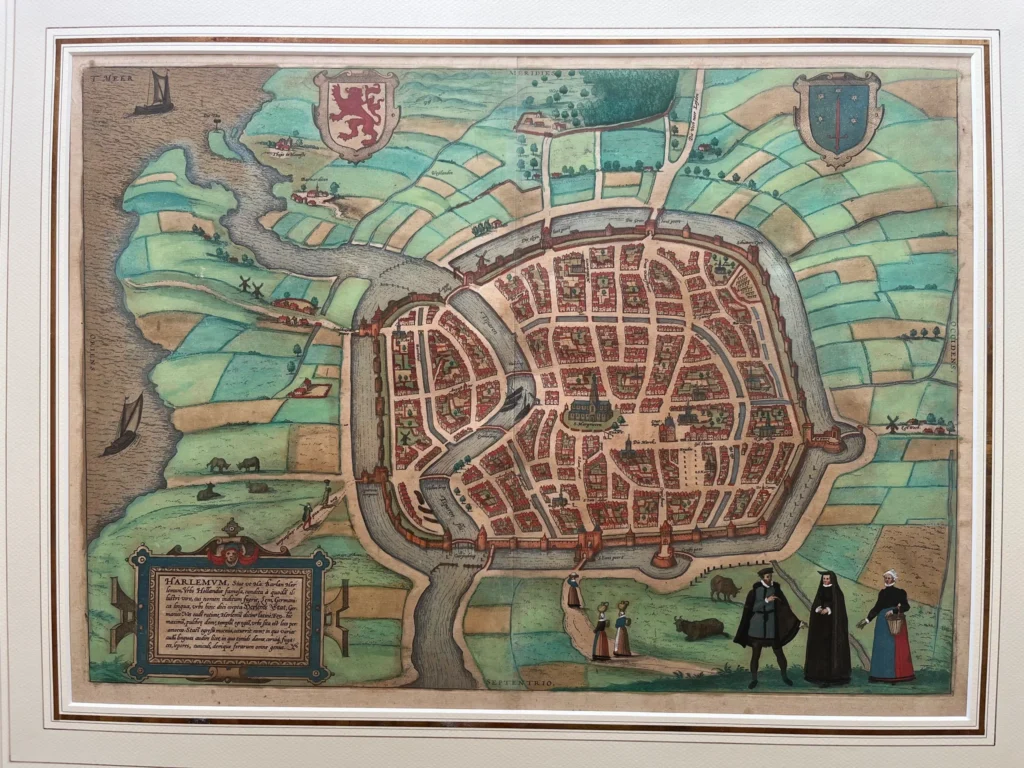
During the 18th century, mapmaking became more scientific and precise. Improved instruments like the telescope and chronometer helped cartographers increase accuracy, shifting maps from decorative art to factual documents. Copperplate engraving stayed as the main printing method, producing fine lines, while hand-coloring added visual impact. French cartographers, such as the Cassini family, led national surveys with geodetic measurements and triangulation, while Dutch mapmakers like Joan Blaeu enhanced printing and atlas quality, ushering in a golden age of atlases.
Maps began including more information and notes to help users, and ornate decorations mostly gave way to scientific clarity, except for cartouches and borders. National and colonial ambitions guided map production to aid navigation and territorial claims. By the late 18th century, large-scale surveys set modern cartography standards. Today, 18th-century maps mix scientific knowledge with artistry, are prized by collectors, and have influenced later cartographic methods. They offer insights into Enlightenment exploration and geography.