Full Description
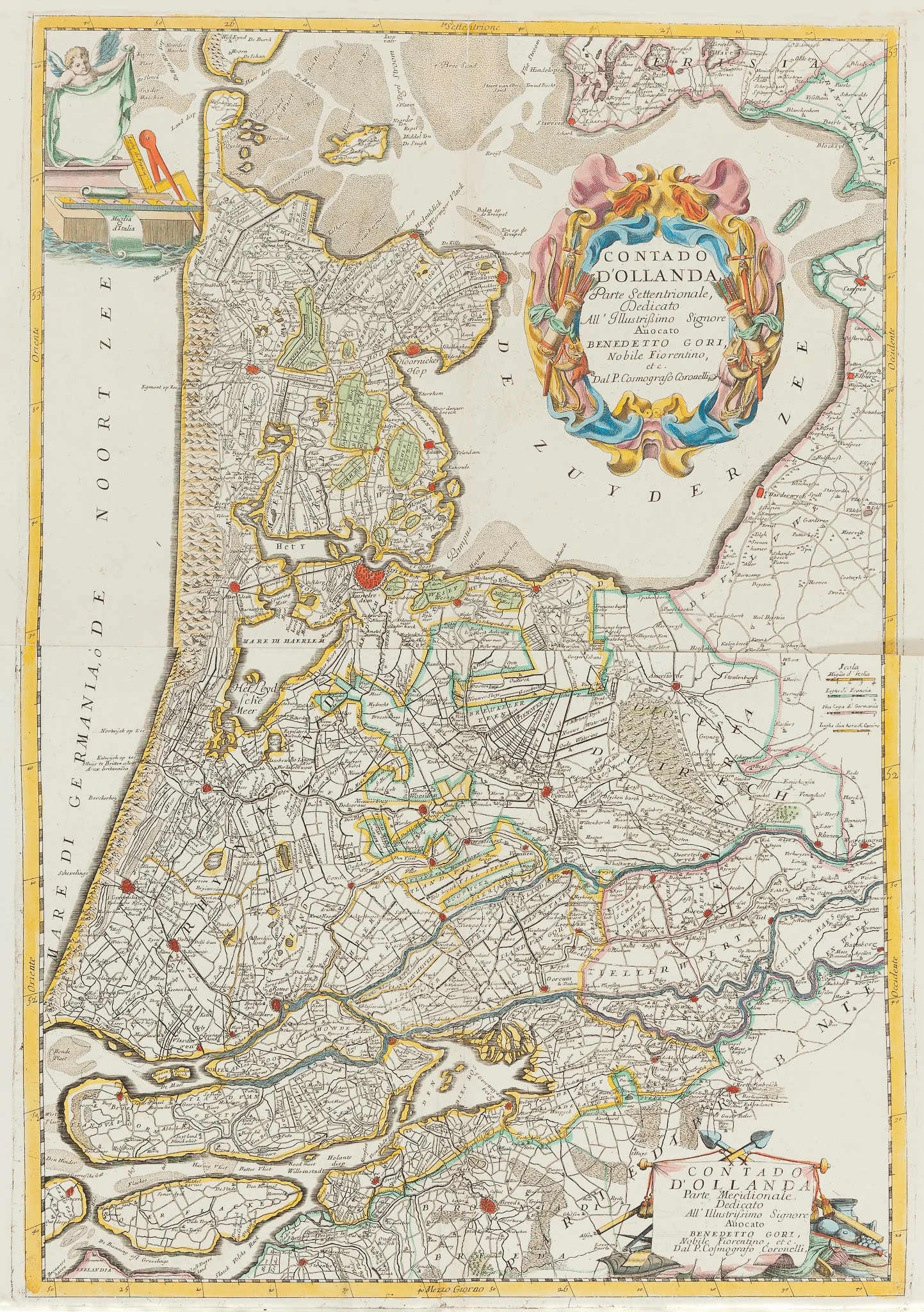
The Contado d’Ollanda is a rare 1696 map of Holland by Vincenzo Coronelli. The Venetian cartographer was known for his detailed and artistic maps. This large engraving joins two sheets that show both northern and southern Holland. Rich handcolour brings the rivers, towns, and coastline to life.
This map of Holland 1696 measures 87 x 58.5 cm. The condition is fine with clean joins and bright original colour. Coronelli’s skill combines accuracy with elegance, showing why his maps remain highly prized. Collectors admire this piece for its beauty, size, and historic importance. VAT: Margingoods, no VAT.
View this print and many others in our store located in the Historic heart of Haarlem.
About the Artist: Vincenzo Coronelli
Vincenzo Coronelli (1650–1718) was an Italian Franciscan friar, cartographer, cosmographer, publisher, and encyclopedist from Venice. He gained fame for creating large, finely crafted terrestrial and celestial globes, including a notable pair for Louis XIV of France. Coronelli was appointed the official Cosmographer of the Republic of Venice and founded the Accademia Cosmografica degli Argonauti, one of the world’s oldest geographical societies. He produced hundreds of detailed maps and atlases, including the influential Atlante Veneto. Coronelli also worked on the first modern-style geographical encyclopedia, the Biblioteca Universale Sacro-Profana. His maps often combined geographical precision with artistic flourishes and covered extensive areas of Europe and the Adriatic coast. He played a major role in Baroque cartography and contributed significantly to geographic knowledge and mapmaking during his lifetime.
About the Era: 17th Century (1600s)
The 17th century greatly advanced mapmaking and printmaking, with copperplate engraving enabling cartographers to create detailed and accurate maps. During the Dutch Golden Age, increased trade and exploration boosted the demand for maps, turning map printing into a major industry. Skilled engravers carved designs into copper plates, applied ink, and pressed paper to produce fine prints. After printing, artisans hand-colored maps to enhance their beauty and clarity. Copperplate printing replaced woodcuts, offering smoother lines and finer details. Renowned mapmakers like Blaeu, Janssonius, and Hondius combined scientific knowledge with artistic skill. This era produced remarkable atlases, such as Joan Blaeu’s Atlas Maior. Maps not only charted geography but reflected political power, trade routes, and scientific discoveries. Printed maps became essential for navigation, colonization, and education. Dutch publishers led Europe’s map market, shaping global cartographic standards. These original maps remain prized for their detail and artistry, influencing future mapmaking and holding high value for collectors and museums today.