Full Description
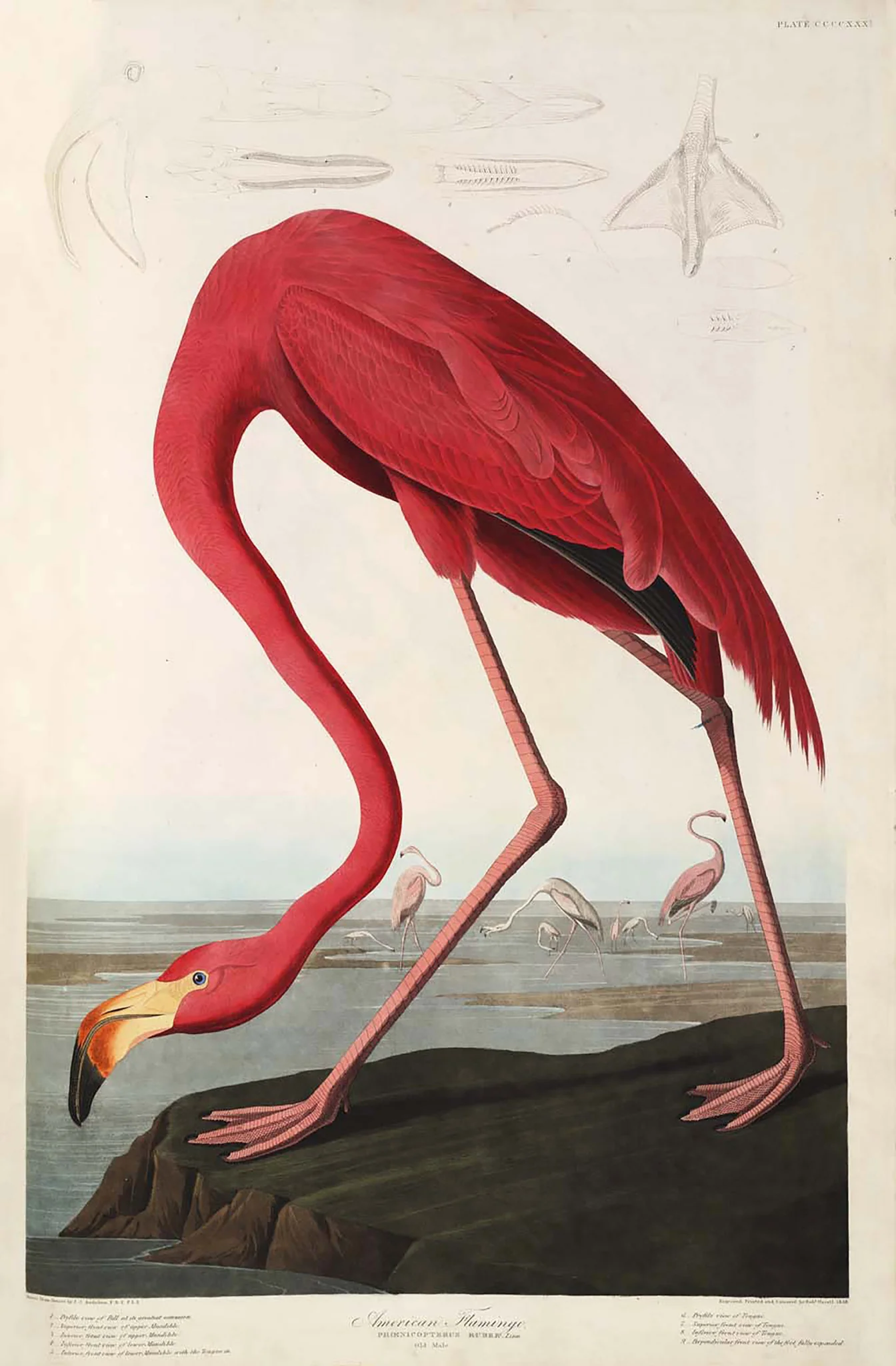
The American Flamingo by Audubon is a limited edition print. It is printed on premium Hahnemühle White Etching paper, the print was produced together with the Teylers Museum in Haarlem. The edition includes only 250 copies. Each print bears an embossed seal, a number, and a certificate of authenticity. Measuring 100 by 67 cm, this print stands out as a striking display.
Moreover, the original plates belong to the Teylers Museum, the sole holder of Audubon’s The Birds of America in the Netherlands. Approximately 200 originals were published in the early 19th century, but only 130 remain worldwide. Remarkably, one copy sold at Christie’s New York in 2011 for $8 million, ranking it among the highest-priced printed books ever.
Thanks to archival inks, this American Flamingo Audubon print preserves bright, vivid colors even in strong daylight. It offers collectors a museum-quality reproduction of a renowned bird illustration. Combining historic artistry, craftsmanship, and exclusivity, this piece appeals to nature lovers and art collectors alike.
Discover the American Flamingo Audubon print, as well as other bird and botanical artwork, in our store located in Haarlem’s historic center.
About the Artist: John James Audubon
John James Audubon (1785–1851) was a French-American artist and naturalist. He made detailed, life-size paintings of North American birds. His work combined art and science with bright, lifelike colors. Audubon helped deepen knowledge about birds and nature in America. Collectors prize his work for its beauty and rarity. His art remains a valued part of natural history and fine art.
About the Era: 19th Century (1800s)
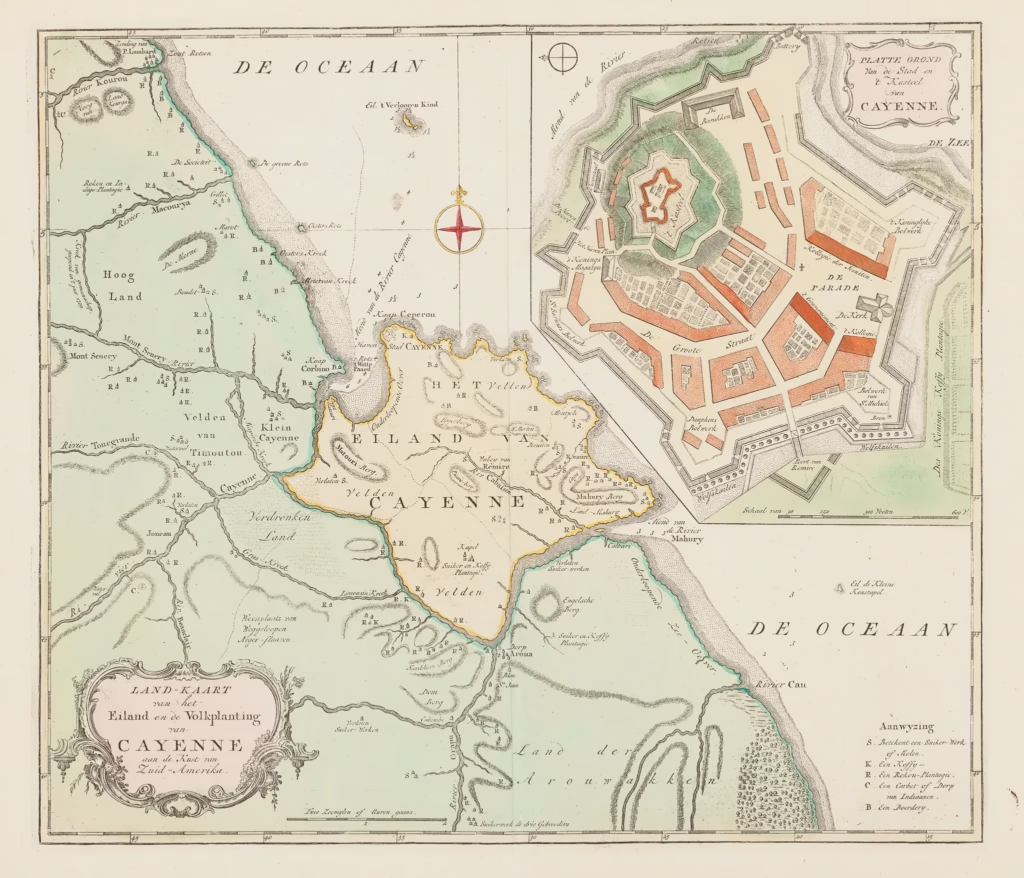
The 19th century marked the era of cartography, as mapmaking became professional, organized, and global. Scientists and surveyors used improved instruments and statistical methods, turning maps into trusted scientific documents with greater precision. Surveying advanced with triangulation, precise tools, and national topographic programs. Printing technology improved, adopting lithography and early color printing to produce clearer, richer maps. New thematic maps used techniques like choropleth, flow lines, and dot density to show data visually. Notably, Charles Minard pioneered multivariate mapping, combining multiple data themes on one map.
Map design reflected industrial and Victorian tastes, balancing detail and readability. Governments supported mapping societies to control territories at home and abroad. Maps became essential for urban planning, empire-building, and scientific research. The 19th century also fostered a global map culture, sharing knowledge internationally. Today, 19th-century maps are prized for their science and artistry. They laid the foundation for modern cartography, data visualization, and geographic information science, and are celebrated by collectors and institutions for their insight into industrial-age geography and culture.