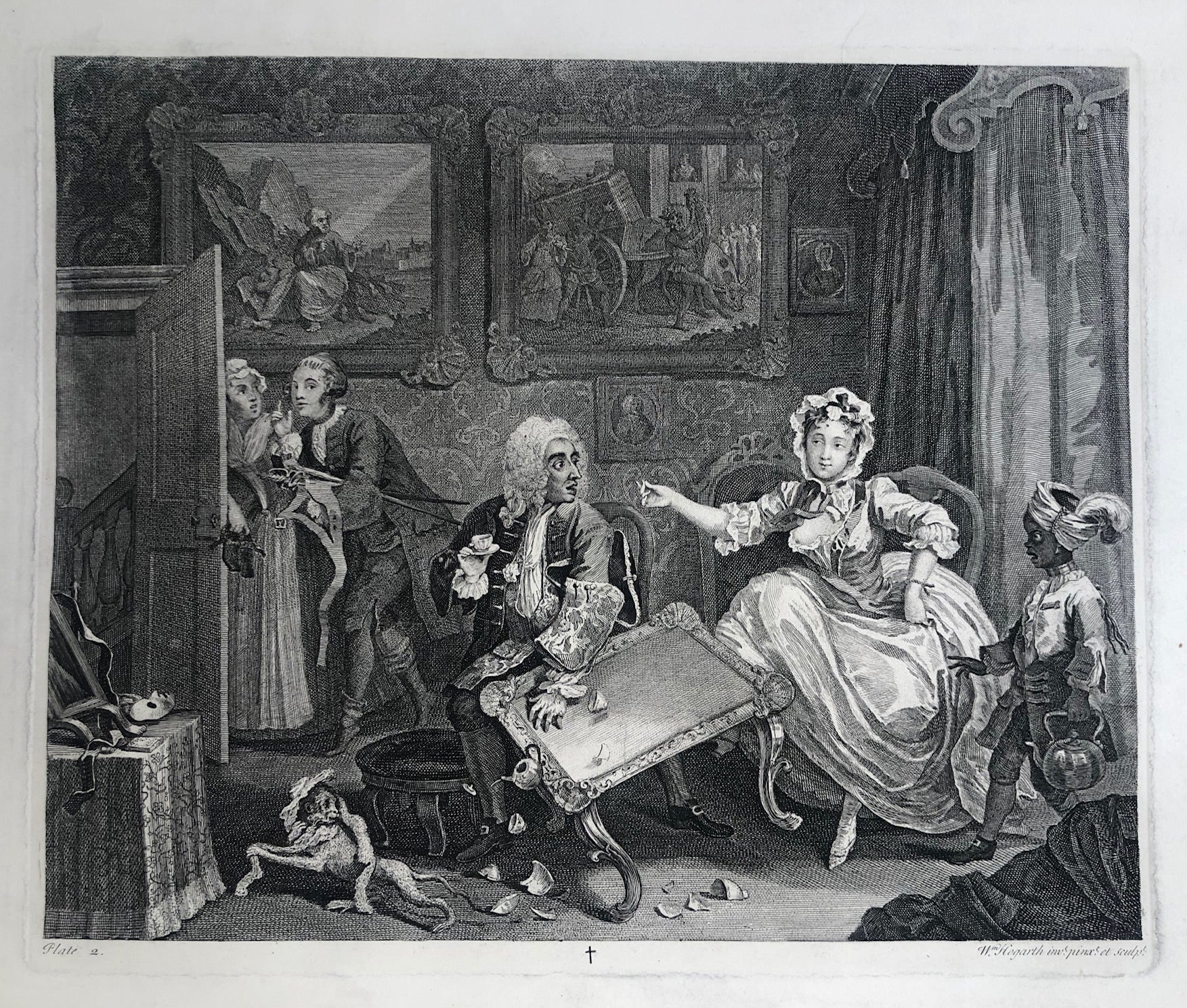
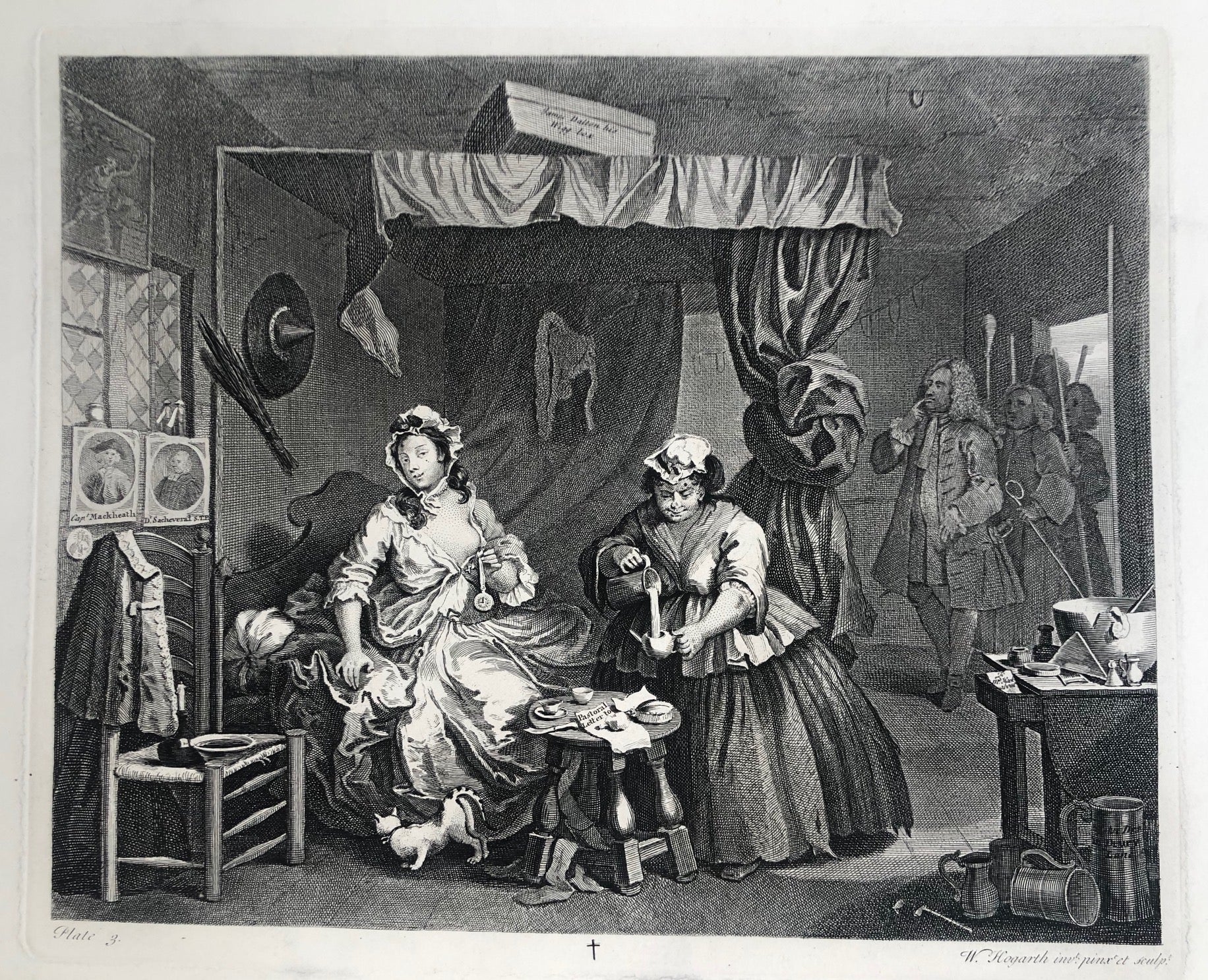
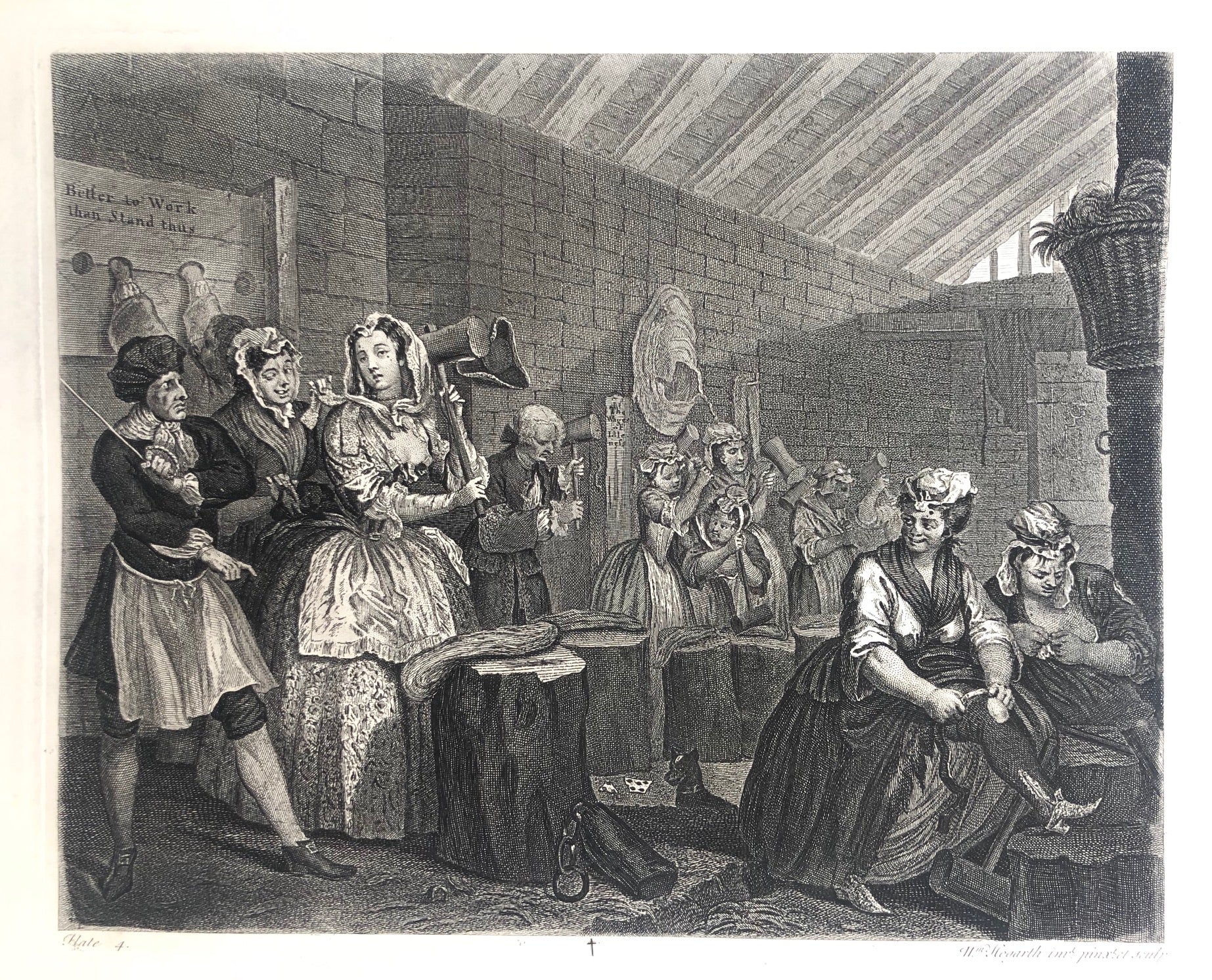
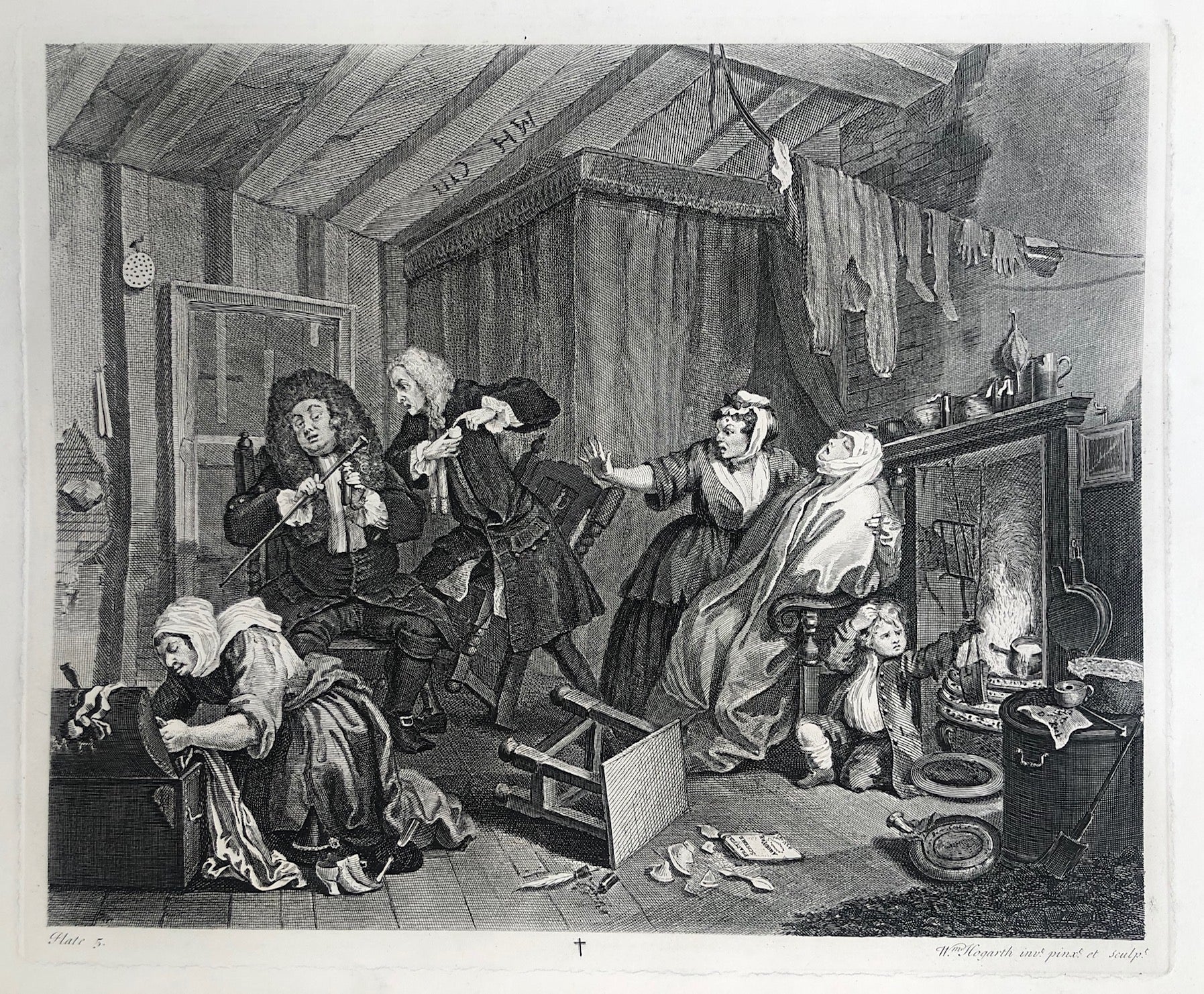
This complete set of A Harlot’s Progress by William Hogarth shows one of the most famous moral stories in 18th-century British art. The series tells the tragic life of Moll Hackabout, a young woman who arrives in London full of hope but falls into poverty, disease, and death. William Hogarth first conceived the series in 1732. John & Josiah Boydell later engraved and published this edition in London around 1795.
Through six detailed scenes, Hogarth combines satire, social criticism, and storytelling. Each plate marks a clear step in Moll’s decline. Together, they form a powerful visual narrative about temptation, exploitation, and the dangers of city life.
Plate 1 – In the first plate, Moll Hackabout arrives at the Bell Inn in Cheapside. She has come from the countryside and hopes to find honest work. She stands modestly dressed and appears innocent and unsure. However, danger already surrounds her.
Mother Needham, a notorious brothel keeper, inspects Moll closely. At the same time, Colonel Charteris lurks nearby and eyes her with clear intent. Meanwhile, a fallen stack of pots in the foreground hints at Moll’s coming moral fall. From the start, Hogarth warns the viewer of what lies ahead.
Plate 2 – In the second scene, Moll now lives as the mistress of a wealthy Jewish merchant. She enjoys comfort and luxury, yet her position is unstable. Suddenly, her keeper arrives home and catches her with another lover.
To distract him, Moll knocks over a small table and snaps her fingers. Her lover escapes in the confusion. However, her keeper’s shocked expression shows that trust is broken. As a result, Moll’s brief security begins to collapse.
Plate 3 – Next, Moll has fallen further. She now works as a common prostitute in a garret near Covent Garden. The room is poor and cramped, yet she still tries to charm the viewer.
At the same time, Justice Gonson enters to arrest her. Bottles of medicine lie scattered around the room. These suggest that Moll already suffers from venereal disease. The dark spots on her face hide more than fashion. Here, Hogarth shows both physical and moral decay.
Plate 4 – In the fourth plate, Moll appears in Bridewell Prison. This institution punished prostitutes, criminals, and unruly apprentices. She now beats hemp as part of her sentence.
Her fine clothing contrasts sharply with the bleak prison interior. Other inmates mock her appearance and laugh at her fall from comfort. Therefore, Hogarth underlines the cruelty and humiliation that follow her choices.
Plate 5 – After prison, Moll returns to her garret. Now she lies dying from venereal disease. Heavy blankets wrap her body like a shroud. Her suffering is clear, yet those around her show little care.
Two doctors argue loudly over their useless treatments. Meanwhile, her servant scolds them in frustration. Moll’s young son sits nearby, ignored and helpless. At this point, Hogarth invites the viewer to reflect on the innocent lives damaged by vice.
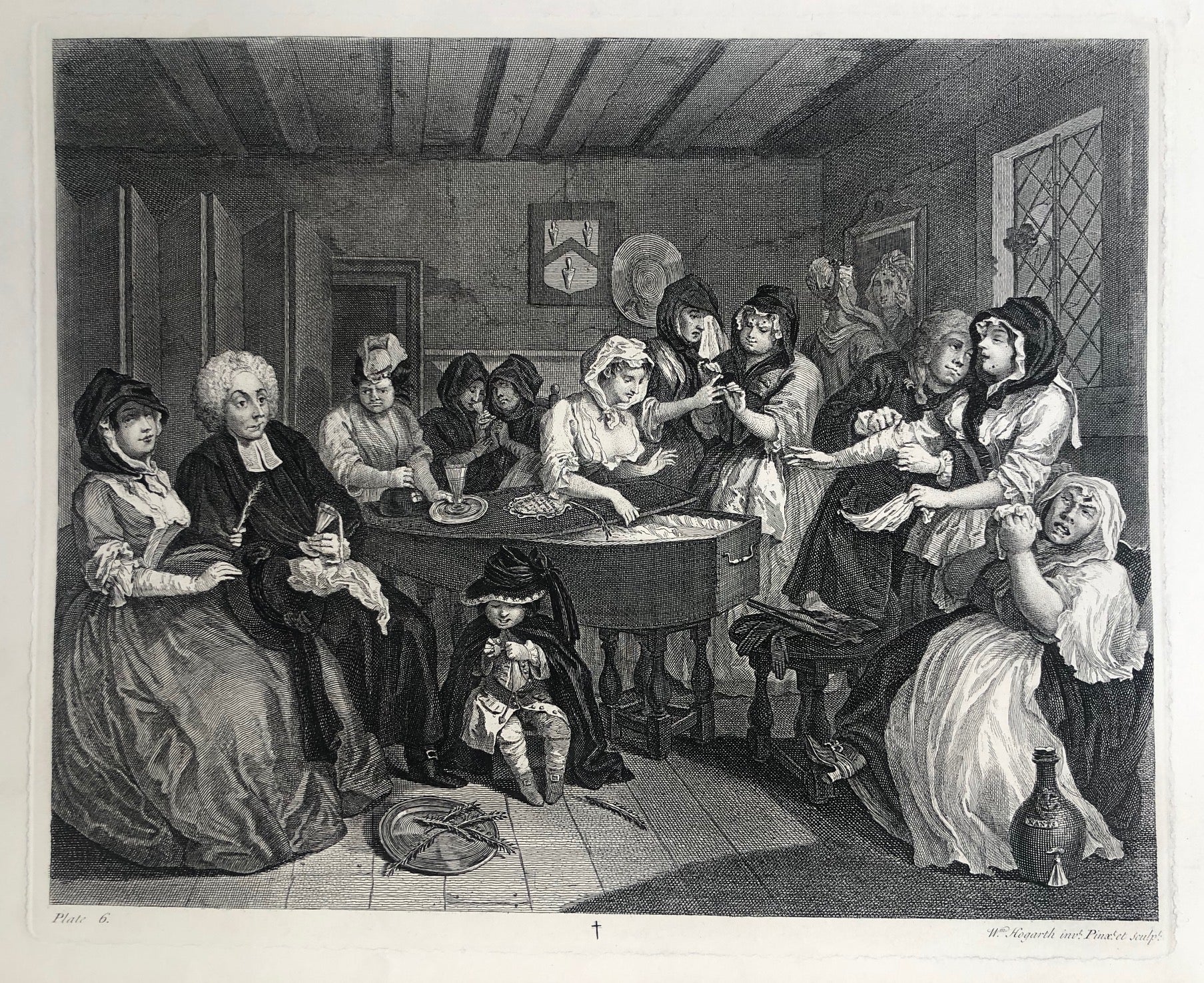
Plate 6 – In the final plate, Moll’s funeral takes place. Fellow prostitutes gather around her coffin. However, respect and sorrow are largely absent. Many mourners gossip or seek new clients instead.
A clergyman fondles a young prostitute beside him, unaware or unconcerned. She gazes outward with a knowing smile. This expression recalls Moll’s earlier confidence. In this way, Hogarth shows that the cycle of corruption will continue.
A Harlot’s Progress by William Hogarth established his reputation as a master storyteller and social critic. The series remains one of the most influential visual narratives of the 18th century. For collectors of British satirical art, this complete set is both historically important and visually compelling.