Full Description
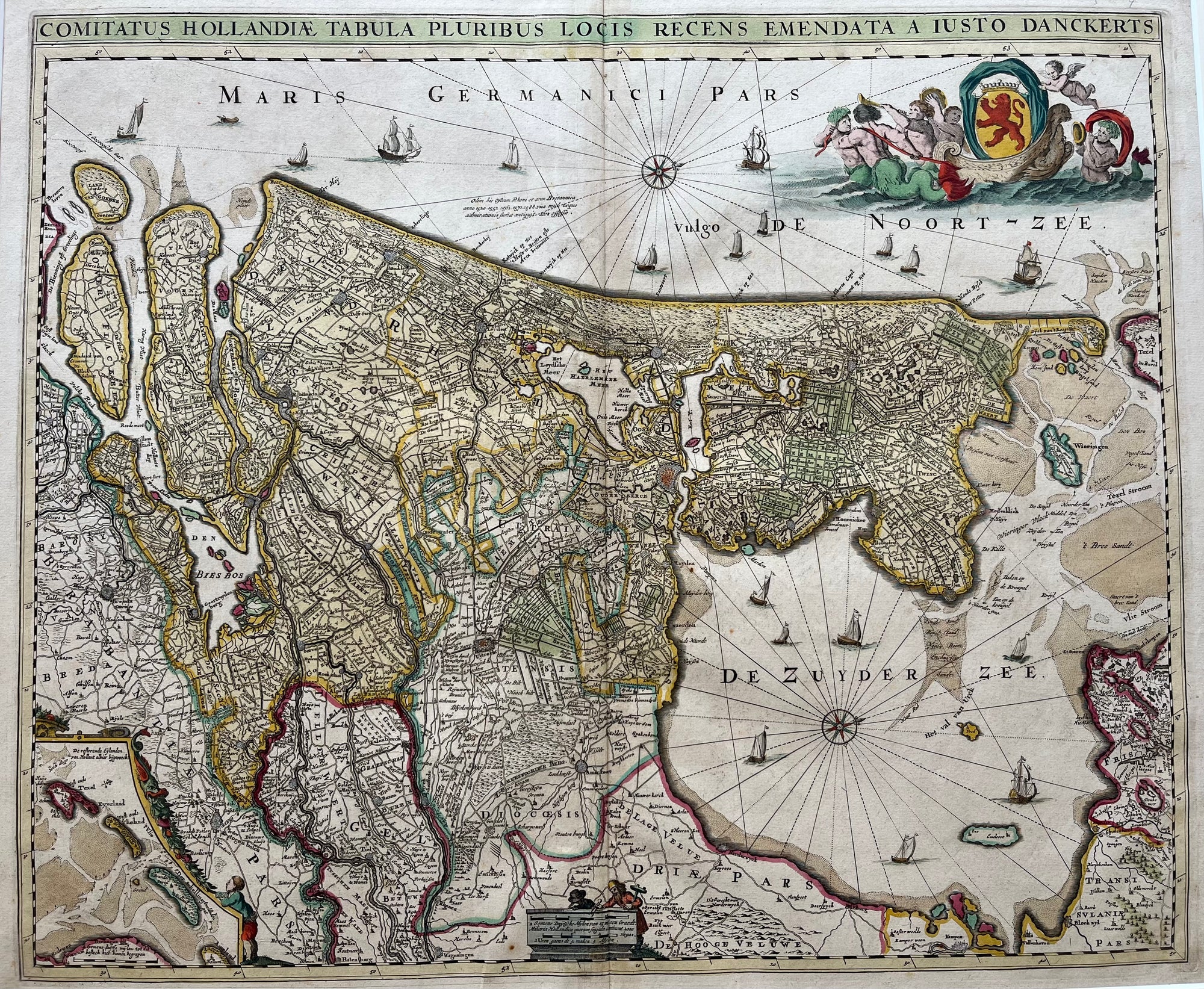
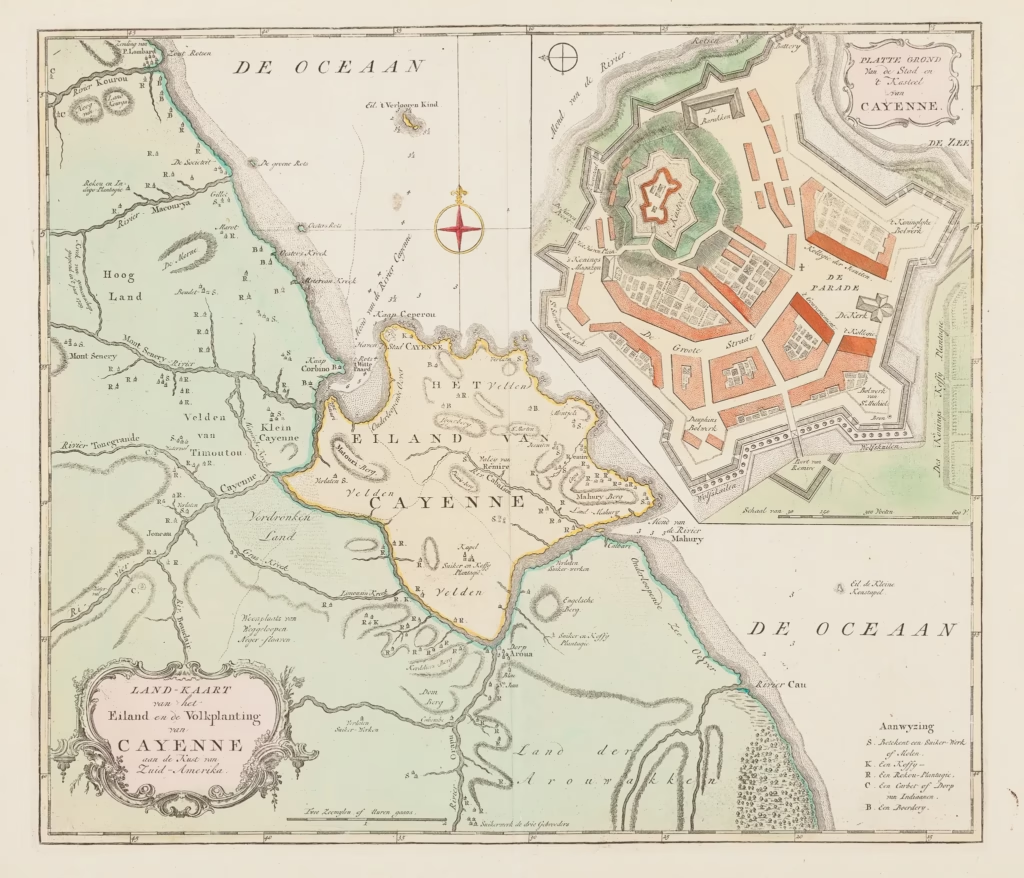
This Holland map by Justus Danckerts from 1680 is a rare and impressive hand-colored map created during the Dutch Golden Age. Published around 1680, it richly details North and South Holland, Utrecht, and the Zuiderzee. The map includes striking compass roses and a charming inset depicting the Waddeneilanden islands.
Collectors prize this map for its vibrant colours, fine engraving, and clear depiction of the Dutch landscape during one of its historic peaks. Danckerts’ craftsmanship shines through in the map’s intricate details and balanced composition. The map serves as both a beautiful decorative piece and an important record of 17th-century Holland’s geography.
Explore our collection of rare Dutch Golden Age maps to find similar exceptional works. This Danckerts Holland map 1680 is a standout piece for any map collector or history enthusiast interested in Dutch cartography.
About the Artist: Justus Danckerts
Justus Danckerts I (1635–1701) was a notable Dutch engraver, cartographer, and print publisher based in Amsterdam. He was the son of Cornelis Danckerts I, founder of one of the leading cartographic firms in Amsterdam active from the 1620s. Justus played a key role in expanding the family’s cartographic business, publishing detailed and decorative maps and atlases from the 1680s onward.
His atlases featured maps of Europe, the Americas, and Asia, many of which combined geographic precision with artistic embellishments characteristic of the Dutch Golden Age. Justus and his sons further developed the business, with the production of atlases continuing into the early 18th century. The Danckerts maps are prized for their historical accuracy and detailed artistry, contributing significantly to Dutch cartographic history.
About the Era: 17th Century (1600s)
The 17th century greatly advanced mapmaking and printmaking, with copperplate engraving enabling cartographers to create detailed and accurate maps. During the Dutch Golden Age, increased trade and exploration boosted the demand for maps, turning map printing into a major industry. Skilled engravers carved designs into copper plates, applied ink, and pressed paper to produce fine prints. After printing, artisans hand-colored maps to enhance their beauty and clarity. Copperplate printing replaced woodcuts, offering smoother lines and finer details. Renowned mapmakers like Blaeu, Janssonius, and Hondius combined scientific knowledge with artistic skill. This era produced remarkable atlases, such as Joan Blaeu’s Atlas Maior. Maps not only charted geography but reflected political power, trade routes, and scientific discoveries. Printed maps became essential for navigation, colonization, and education. Dutch publishers led Europe’s map market, shaping global cartographic standards. These original maps remain prized for their detail and artistry, influencing future mapmaking and holding high value for collectors and museums today.