Full Description
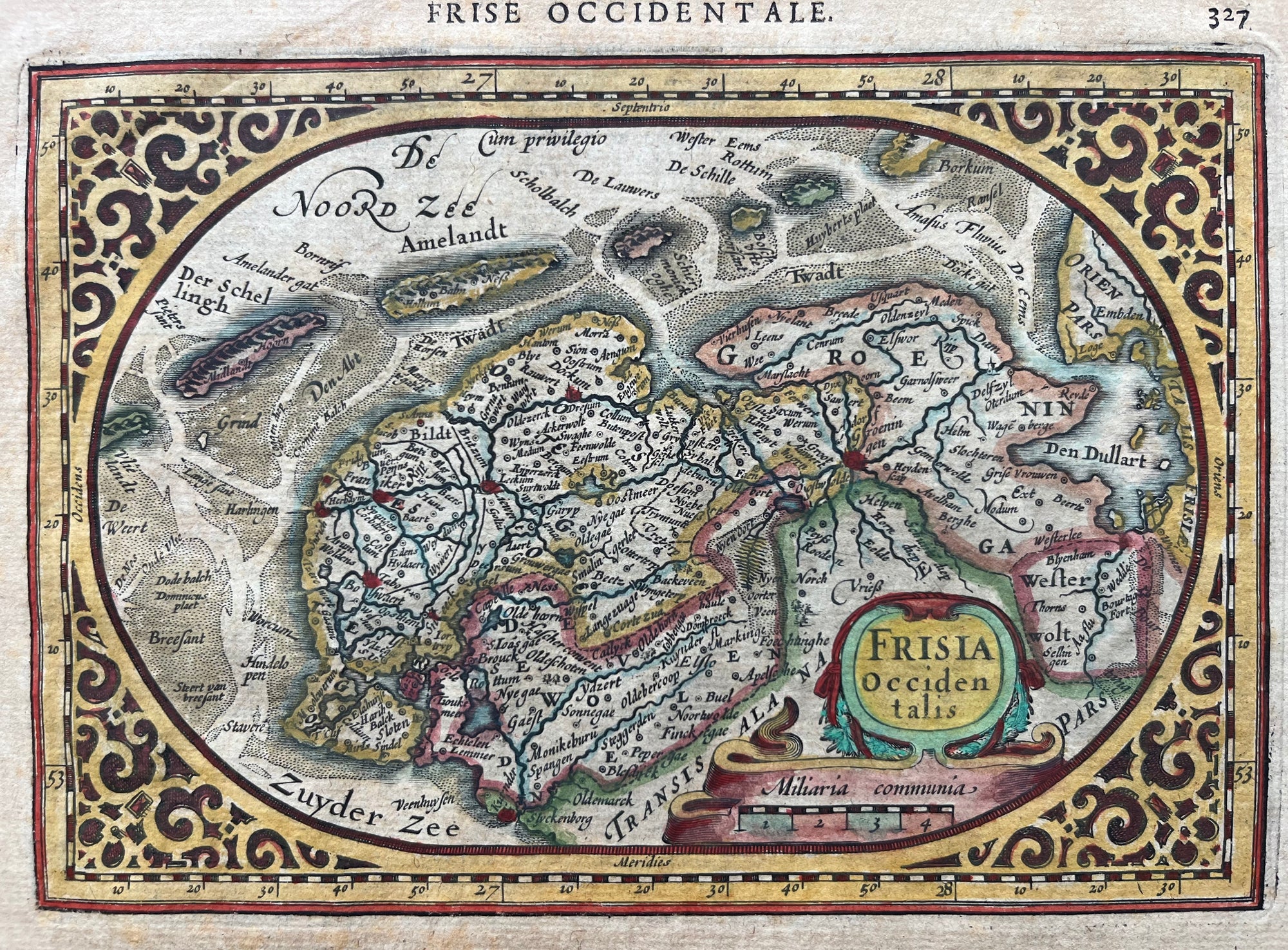
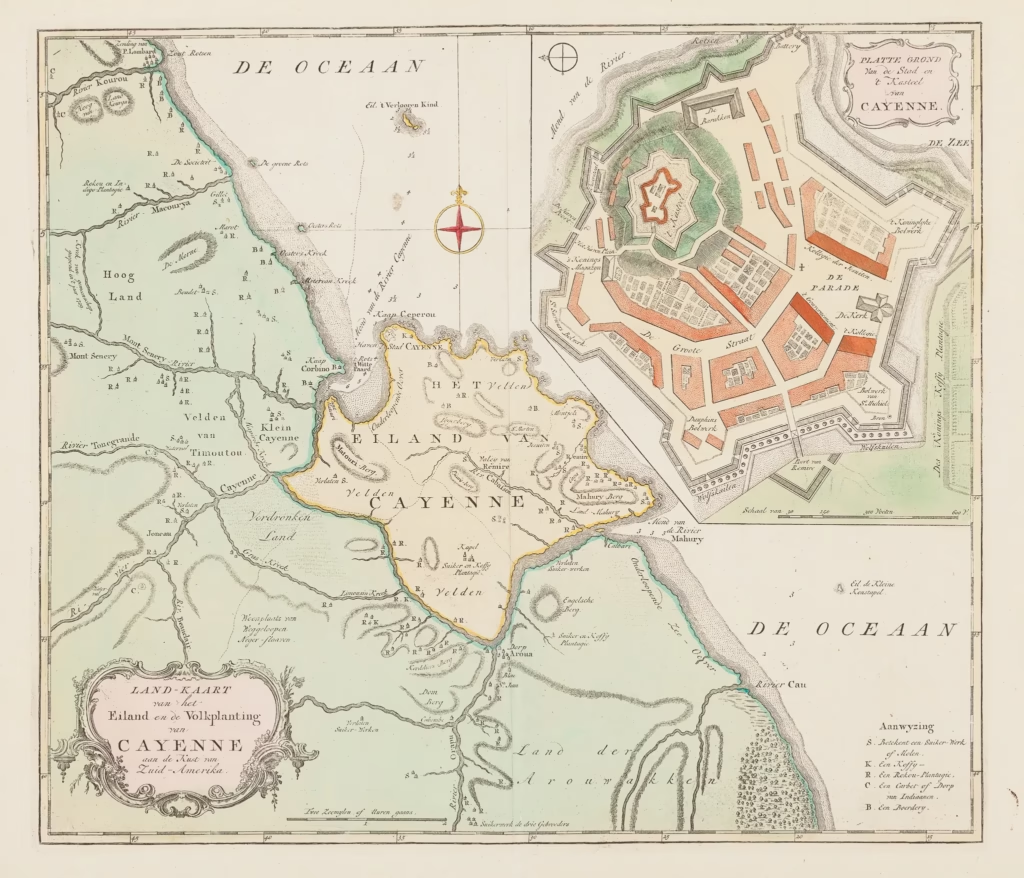
This decorative antique Friesland map, Frisia Occidentalis, was made by Abraham Goos and published between 1616 and 1634 in the Atlas Minor. The hand-colored engraving shows the northern Dutch provinces Friesland and Groningen, along with the Wadden Islands like Terschelling and Ameland.
The map displays rich cartouches and detailed coastlines. It highlights the skill of early 17th-century Dutch mapmakers. It also reflects the pride of the United Provinces during the Dutch Golden Age, a time of exploration, trade, and mapmaking.
The Atlas Minor made it possible to access beautifully engraved maps in a more affordable and portable form. This map belongs to this important tradition, started by Jodocus Hondius.
Collectors value this map for its artistic style and historical place in Dutch cartography. It ties to Amsterdam’s rich mapmaking history through figures like Abraham Goos.
Visit our store in Haarlem for our full collection of rare antique maps.
About the Artist: Abraham Goos
Abraham Goos was a notable Dutch cartographer, engraver, and publisher active during the early 17th century, renowned for his detailed work and collaborations with leading mapmakers of his time. Goos trained under Jodocus Hondius and worked closely with figures like Jan Janssonius and English mapmaker John Speed. He produced several important atlases and globes, including the influential “Nieuw Nederlandtsch Caertboeck” in 1616, one of the first atlases devoted to the Netherlands. His maps combined artistic technique with geographic accuracy, pioneering cartographic representations such as one of the earliest maps to depict California as an island and the first printed Hebrew map of the Holy Land. Collectors value his finely engraved works for their historical significance, craftsmanship, and their role in shaping European understanding of world geography during the Golden Age of Dutch cartography.
About the Era: 17th Century (1600s)
The 17th century greatly advanced mapmaking and printmaking, with copperplate engraving enabling cartographers to create detailed and accurate maps. During the Dutch Golden Age, increased trade and exploration boosted the demand for maps, turning map printing into a major industry. Skilled engravers carved designs into copper plates, applied ink, and pressed paper to produce fine prints. After printing, artisans hand-colored maps to enhance their beauty and clarity. Copperplate printing replaced woodcuts, offering smoother lines and finer details. Renowned mapmakers like Blaeu, Janssonius, and Hondius combined scientific knowledge with artistic skill. This era produced remarkable atlases, such as Joan Blaeu’s Atlas Maior. Maps not only charted geography but reflected political power, trade routes, and scientific discoveries. Printed maps became essential for navigation, colonization, and education. Dutch publishers led Europe’s map market, shaping global cartographic standards. These original maps remain prized for their detail and artistry, influencing future mapmaking and holding high value for collectors and museums today.