Full Description
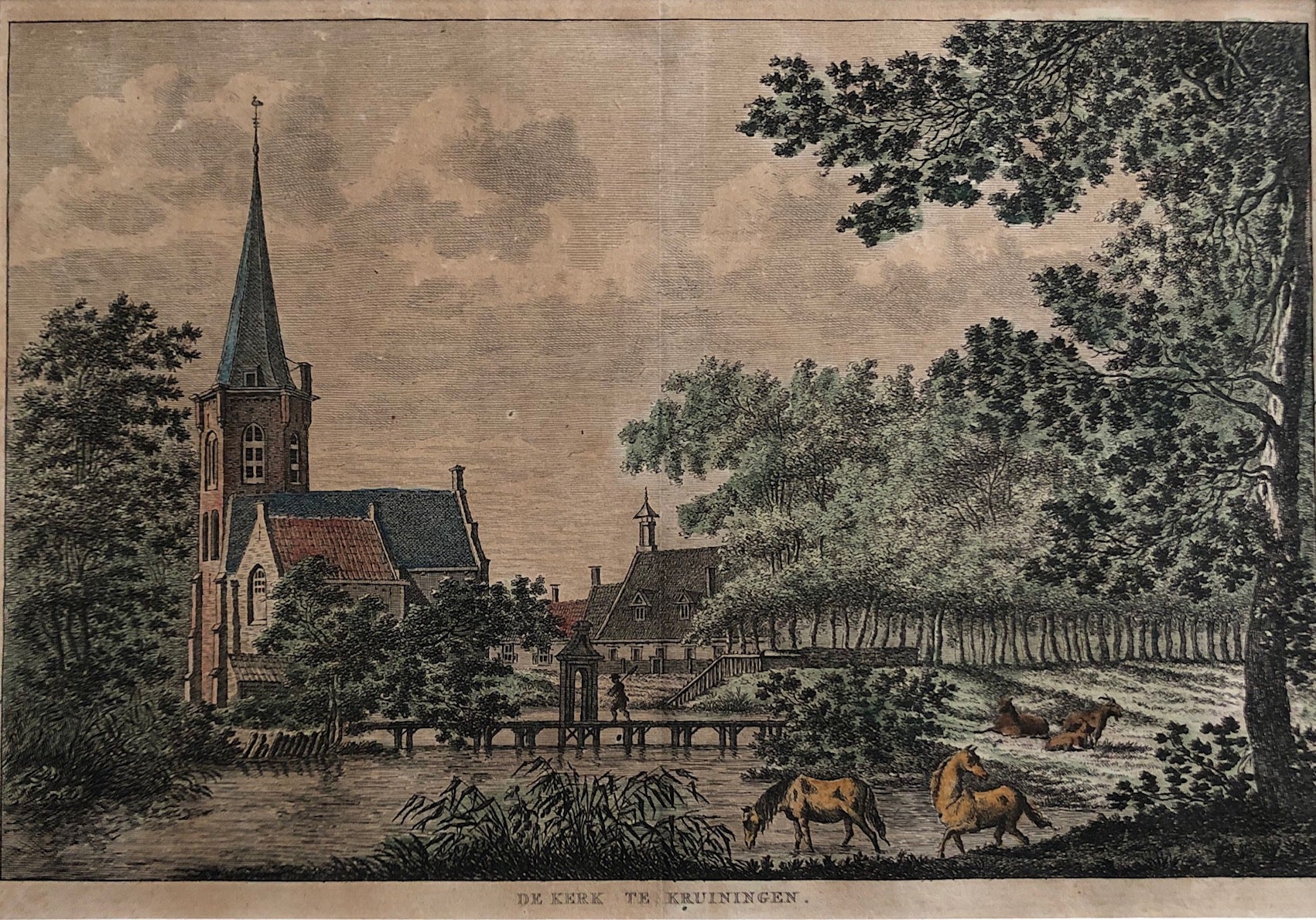
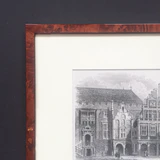
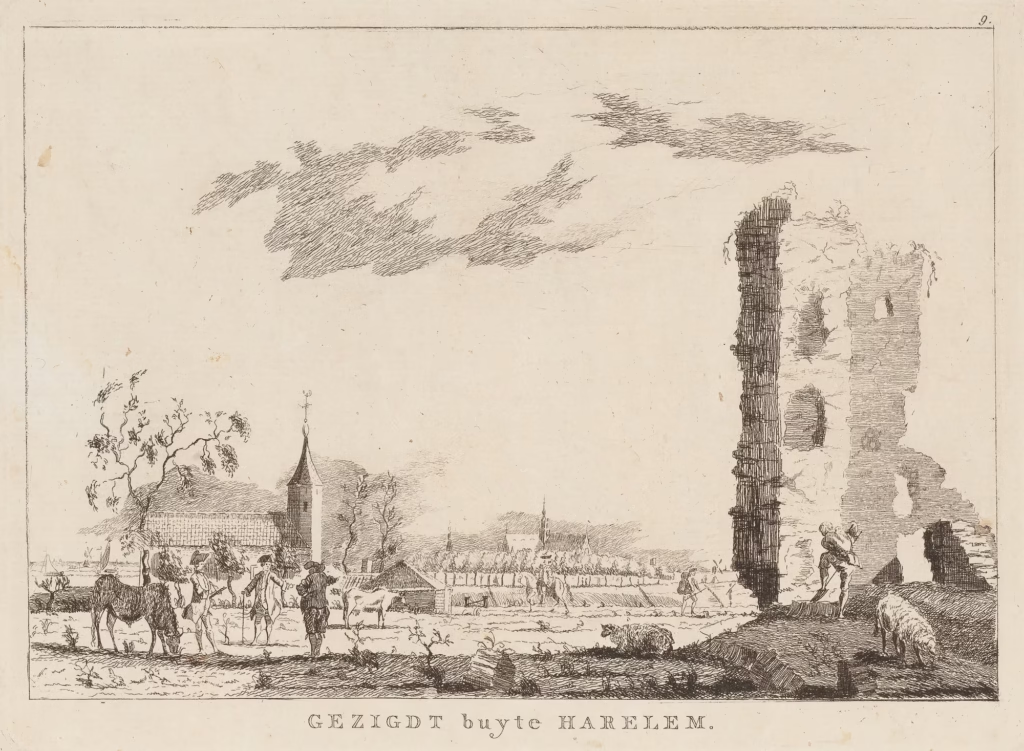
De kerk te Kruiningen is a lovely Kruiningen Church Engraving created by K.F. Bendorp after a drawing by Jan Bulthuis. Published in 1793, this handcoloured print depicts the church of Kruiningen in Zeeland with remarkable detail. The calm village setting and careful use of colour bring the historic Dutch landscape to life.
The engraving measures 15.5 x 23 cm and is in good condition with some gentle agetoning. The fine lines and delicate tones reflect the artistic craftsmanship of the late 18th century. Collectors will appreciate how clearly this piece captures the spirit and architecture of Zeeland’s rural heritage.
This Kruiningen Church Engraving is an attractive choice for anyone interested in antique prints, Dutch regional art, or early topographical works. It combines historical value with decorative charm and remains a timeless representation of classic Dutch engraving.
Explore our entire collection of City Views, antique maps, Botanical prints and much more at our store located in the historic heart of Haarlem.
About the Artist: Carel Frederik Bendorp, J. Bulthuis
K.F. Bendorp (Carel Frederik Bendorp, 1736–1814) was a Dutch engraver, draftsman, and painter. He specialized in detailed town and city views across the Netherlands. Bendorp created over 600 etchings between 1786 and 1792, often after drawings by J. Bulthuis. His works capture Dutch villages, landscapes, and urban scenes with precision. Collectors value his prints for their historical detail and artistic quality.
About the Era: 18th Century (1700s)
During the 18th century, mapmaking became more scientific and precise. Improved instruments like the telescope and chronometer helped cartographers increase accuracy, shifting maps from decorative art to factual documents. Copperplate engraving stayed as the main printing method, producing fine lines, while hand-coloring added visual impact. French cartographers, such as the Cassini family, led national surveys with geodetic measurements and triangulation, while Dutch mapmakers like Joan Blaeu enhanced printing and atlas quality, ushering in a golden age of atlases.
Maps began including more information and notes to help users, and ornate decorations mostly gave way to scientific clarity, except for cartouches and borders. National and colonial ambitions guided map production to aid navigation and territorial claims. By the late 18th century, large-scale surveys set modern cartography standards. Today, 18th-century maps mix scientific knowledge with artistry, are prized by collectors, and have influenced later cartographic methods. They offer insights into Enlightenment exploration and geography.